Upload a course. Track who finished it. Print a certificate. For twenty years, that was the whole job of an LMS. It's not enough anymore, and most L&D teams already know it in their gut, even if the dashboard still says 94% completion.
People don't want a course library. They want to get better at their actual job, on their own schedule, without logging into a separate system to do it. And leadership doesn't want a completion rate anymore; they want to know if training moved a number they care about: turnover, ramp time, revenue per rep. If you can't answer that, you're not running a learning program; you're running a cost center with a login page.
That's the gap this next generation of platforms is built for. It's also the exact problem Learnly exists to solve, which felt like the right place to start this blog.
So what actually changes?
Courses get built by AI, not just delivered by it. The slowest part of training has always been making the thing in the first place. Feed a prompt, a document, or a video into the right platform now, and it hands back a finished course, outline, lessons, quiz questions, done, in a fraction of the time it used to take. That's not a nice efficiency win; it's the difference between refreshing your training once a year and refreshing it as fast as the job itself changes.
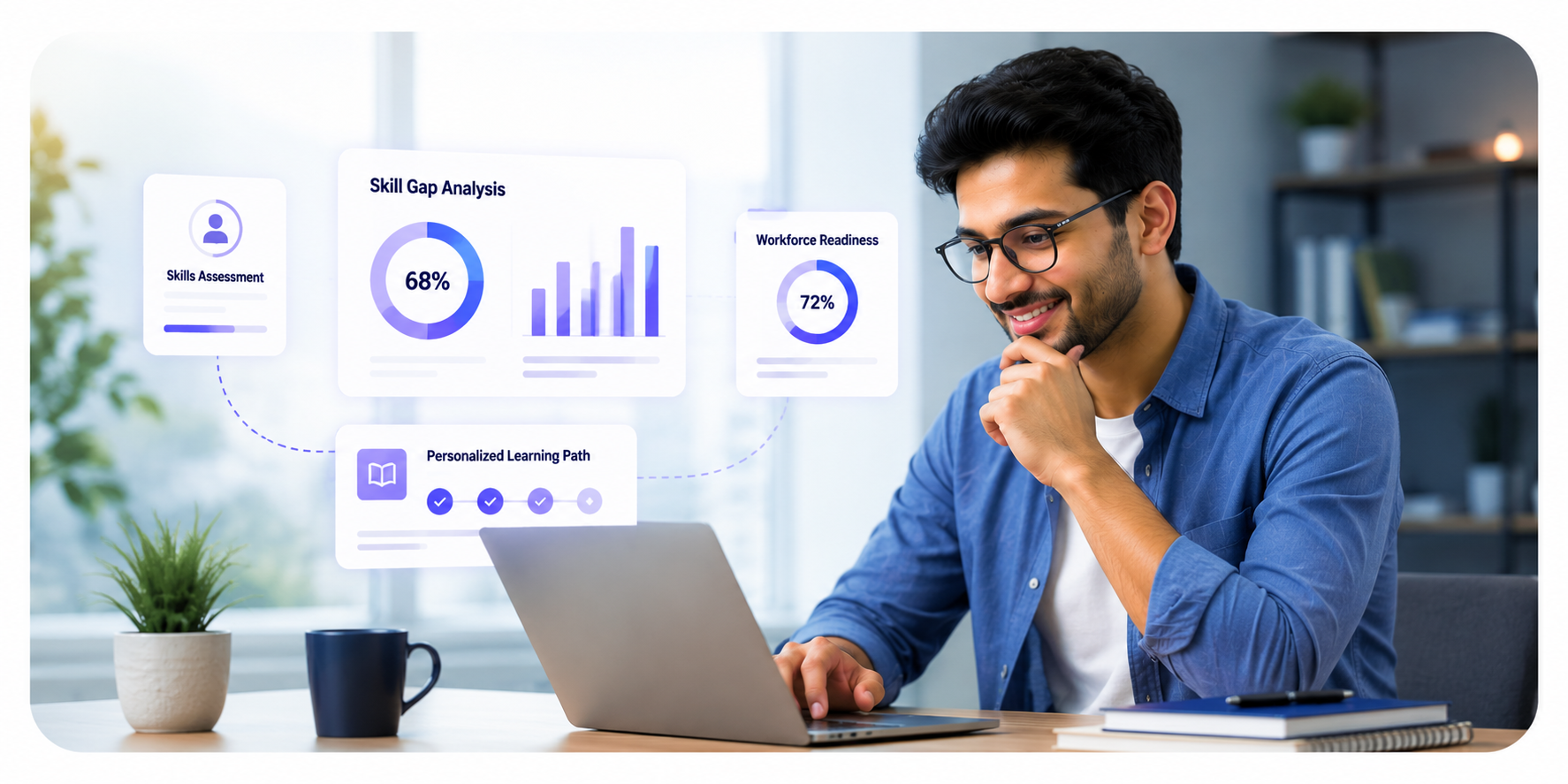
Completion stops being the finish line. The real question was never "did they finish the module?" It's "can they actually do the thing?" That means tracking skill mastery, not checkboxes, knowing which skills someone's weak, solid, or expert in, and whether they can just recall the material or actually apply it when it counts.
Training shows up where people already are. Nobody wants to leave their CRM or their inbox to go "do their learning." The best experience is a five-minute nudge inside the tool they're already using, not a separate tab they have to remember exists.
The busywork disappears. Enrollments, reminders, compliance deadlines, prerequisite chains- none of that should need a human anymore. Automate it, and your L&D team gets its time back for the work that actually requires a person: designing programs, reading the data, and advising the business.
And people forget almost everything within weeks, so the best platforms plan for that. This isn't a knock on your learners; it's just how memory works. Without reinforcement, most of what someone learns in a training session fades within a month, no matter how good the course was. The fix isn't a longer course; it's short, spaced check-ins that bring the material back right as it's about to slip, turning quiz mistakes and course content into quick flashcards someone reviews for two minutes between meetings, not a separate study session.
What this actually looks like
Take Maya, a new sales rep three weeks into onboarding.
She works through a product knowledge course built by AI from the team's existing sales deck, then takes an assessment that scores her not just pass/fail but skill-by-skill, strong on product basics, weak on objection handling. That weak spot doesn't just sit in a report; it routes her straight into targeted practice.
From there, it stops being theoretical. Maya gets on real customer calls, and her manager reviews and signs off on her actual performance against a defined competency, not a role-play- the real thing. In the background, the mistakes from her earlier quiz have already turned into flashcards she reviews in spare five-minute pockets, so the objection-handling gap doesn't just get flagged once and forgotten. A few weeks later, a quick follow-up check confirms whether she's actually using what she learned on real calls, not just whether she remembers it.
Zoom out and her whole onboarding is one connected path: course, assessment, verified performance, reinforcement, certification, with a single progress number and a readiness score attached, instead of six disconnected systems and a manager's gut feeling about whether she's ready. That's the difference between training someone and actually knowing they're ready.
Where to start
You don't need to fix everything this quarter. Start here:
- Map the two or three roles where a skills gap actually threatens the business, and build out from there.
- Be honest about where your current system falls short on the points above, especially proof, not just completion.
- Pick one or two high-stakes scenarios and pilot real on-the-job verification before rolling it out everywhere.
- Start tracking skill mastery and actual on-the-job application, even messily, alongside completion. Imperfect data beats a perfect completion chart.
The bottom line
None of this is a faster version of the LMS you bought five years ago. It's a different job entirely, built by AI, proven by evidence, and judged by whether it actually changed how someone performs.
That's exactly the gap Learnly was built to close. Built by the team behind BrainCert, Learnly generates courses with AI, verifies real skills instead of just course completions, validates on-the-job performance with observer sign-off, keeps it all from fading with automatic reinforcement, and measures whether training actually transfers to the job, all tied together in one readiness score instead of scattered across a dozen reports. If that's the direction your team needs to go, we'd love to show you what it looks like in practice.